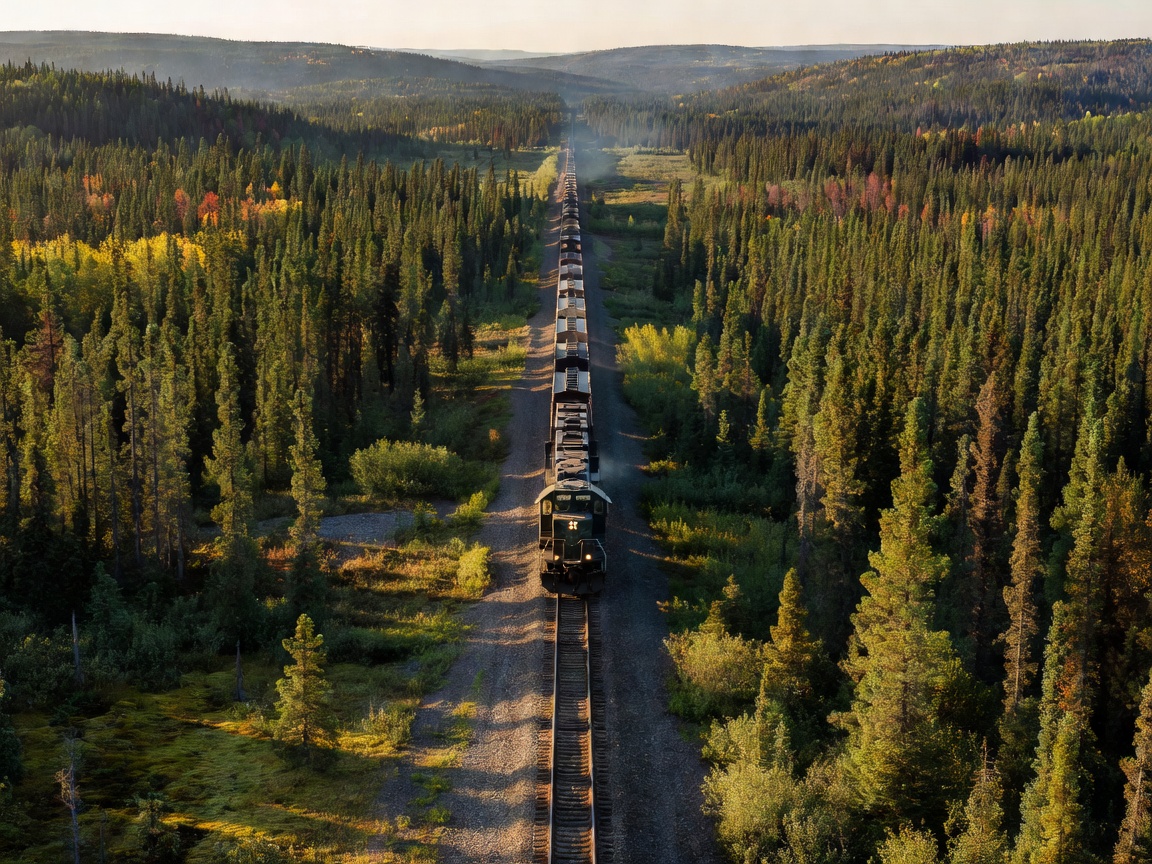
The Steel Spine of Northern Eurasia
Spanning from the Yaroslavsky Station in Moscow across the Ural Mountains, the Siberian taiga, the shores of Lake Baikal, and the Far Eastern frontier to the Pacific port of Vladivostok, the Trans-Siberian Railway (Транссиб) is the world’s longest direct single passenger railway route.
Measuring an astonishing 9,289 kilometers (5,772 miles), taking the classic Rossiya (Train No. 2) passenger service non-stop requires six full days and nights of uninterrupted rolling steel travel, traversing two continents and eight distinct international time zones.
Historic Construction Across Permafrost and Granite
Initiated under Tsar Alexander III in March 1891 and supervised by Finance Minister Sergei Witte, building the Trans-Siberian was one of history’s most daunting engineering undertakings. Construction was pushed simultaneously from both ends across extreme permafrost, marshy floodplains, and dense Siberian forests.
- Circum-Baikal Railway: The most hazardous portion required blasting 33 cliff tunnels through solid granite around the craggy shoreline of Lake Baikal, utilizing dynamite, pickaxes, and imported Italian stone masons.
- Amur River Bridge: The final link in the continuous line, the 2.6-kilometer bridge at Khabarovsk over the Amur River, was finally opened in October 1916.
Freight Corridor Comparison: While the Trans-Siberian remains the longest scheduled single-route passenger train line, the longest regular freight corridor is the Yiwu–Madrid Railway Line, spanning 13,052 kilometers (8,110 miles) from eastern China across Kazakhstan, Russia, Belarus, Poland, Germany, and France to Spain.
Major Station Milestones Along the 9,289 km Line
| Kilometer Marker | Station / Landmark | Geographic Significance |
|---|---|---|
| km 0 | Moscow (Yaroslavsky) | Western origin and European terminus |
| km 1,777 | Ural Mountains Obelisk | Official continental border between Europe & Asia |
| km 1,818 | Yekaterinburg | Industrial hub at the foot of the Urals |
| km 3,335 | Novosibirsk | Crossing over the massive Ob River |
| km 5,185 | Irkutsk | "The Paris of Siberia" near Lake Baikal |
| km 9,289 | Vladivostok | Pacific Ocean terminus overlooking the Golden Horn Bay |